Birth of a Rebel
How he became, in his words, the perpetual rebel.
Inovator · Healer · Musician · Artist

Vivek Chaturvedi
Seven circles, seven ways in. Pick one, or just enter.

Vivek with his guitar. The circles are drawn.
Inovator · Healer · Musician · Artist
One mind, many crafts.
Vivek Chaturvedi is a polymath in Bengaluru: an inovator and the founder of the design house Aadivaahan, a healer and a coach, a self-taught musician and an artist. He served in the Indian Navy and spoke at TEDx on The Unperformance.
Scroll, and the juggle lands
01
Innocence · Courage · Unfearing
पूर्णम्
Purnam means full, or whole. It is the name Vivek gives his healing work, which he offers one-to-one under the name Avimukt. Three words sit at its centre: innocence, courage, unfearing.
You may have built a good life on top of an old pain. You train harder, read more, try the next method. The pain waits.


Vivek’s healing work starts from one belief: you cannot think your way out. The body remembers, so the body is where you go. “I have walked it,” he says.
Try it now · one minute
This is where the path inward begins. It needs nothing but your two hands and one quiet minute.
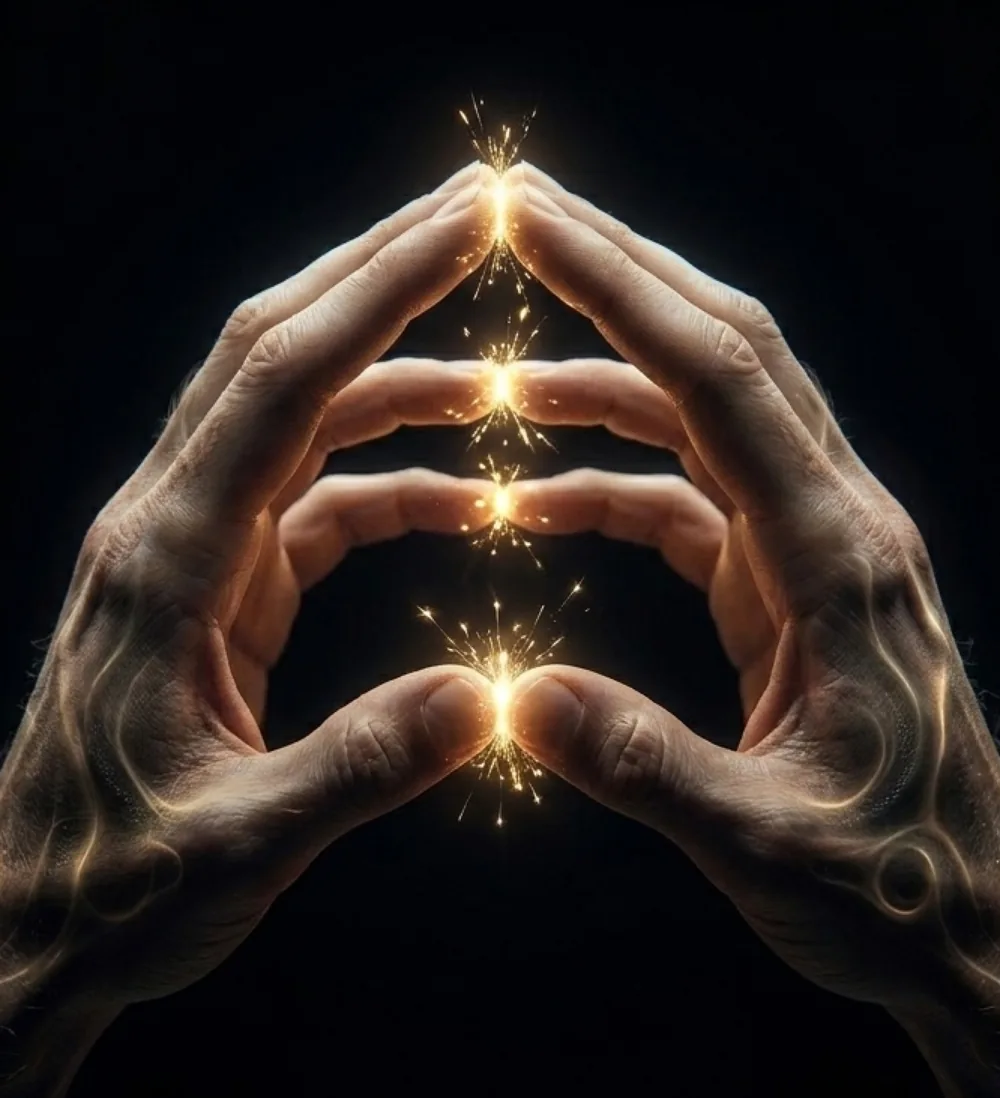
This work supports your wellbeing.
02
Work in · Live in the moment · Return to centre
Vivek calls his coaching practice Spiral. In his own words: “The practice of what I now call Spiral, the search for personal integrity, has really transformed my life.” He now walks the same path with others, one to one.
Spiralin · the art of returning to yourself
The body is the book of revelation.
Everything written in you is already there. You have simply forgotten how to read it.
BE YOUR GREATEST, HIGHEST functioning SELF
03
Find the root · Ask nature · Build it
time to reinvent the wheel

Shell, animal, bones · 1 of 3
Look at a car. A helmet. A boot. Each one is a hard shell with a soft person inside.
A shell is good at one thing: sitting still and taking a hit. It is heavy. It is slow. And it does nothing to make the body inside it stronger.

Shell, animal, bones · 2 of 3
A bison weighs close to a tonne. It can run as fast as a horse, turn hard, and hit head-on without hurting itself.
It has no shell at all. So where does that strength come from?

Shell, animal, bones · 3 of 3
A skull plate that takes huge impacts. Shoulder blades that carry the ribs. Light legs that spring. The frame is on the inside and the soft parts are on the outside. You are built the same way.
“Why is a car like a tortoise? And yet we expect it to run like a bison.”Vivek Chaturvedi
The method · Aadivaahan
Aadivaahan is Vivek’s design house. It takes one everyday object at a time, finds the wrong idea buried in it, and redesigns it the way a living body would. आदि means “the origin”.
A chariot, a carriage, a steam train, a space shuttle. All of them still roll on the same old idea.
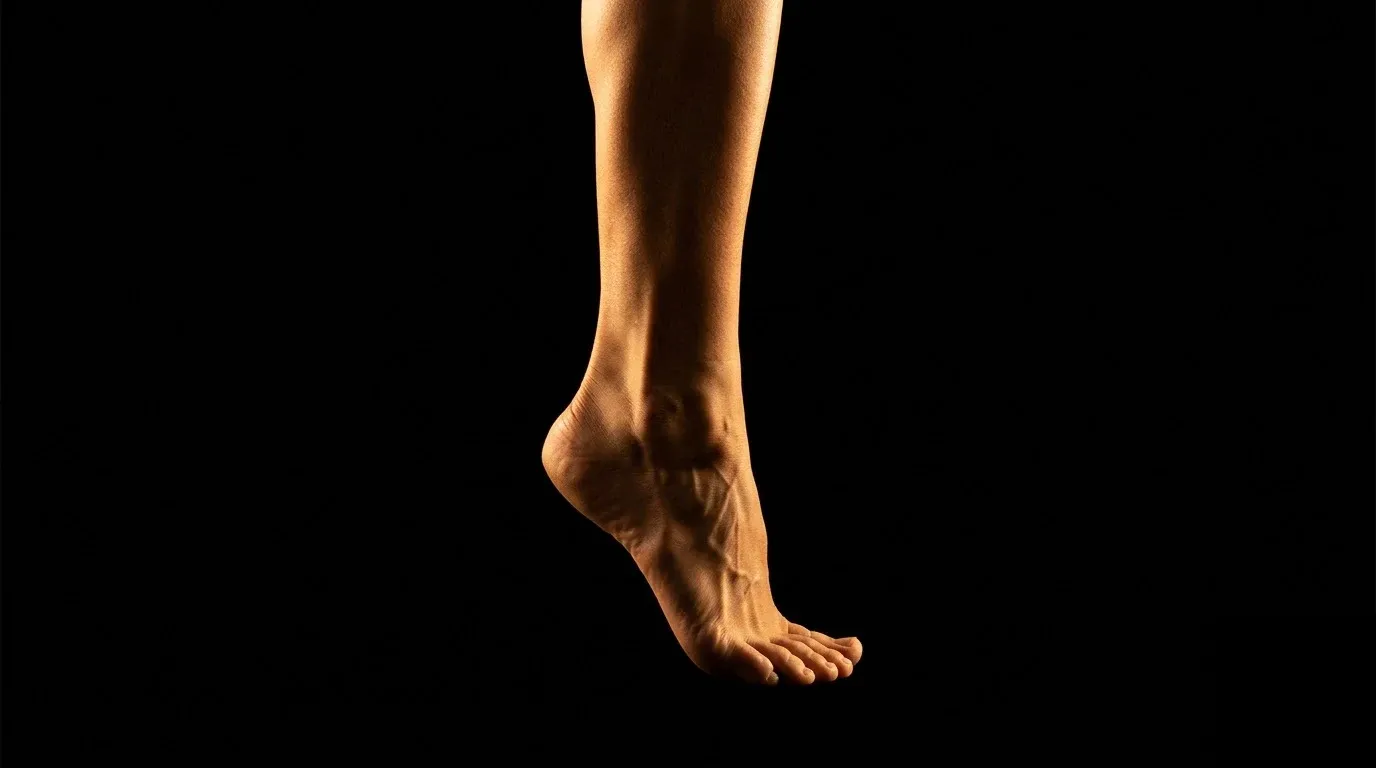
Footware · spelled that way on purpose
Modern shoes are built around landing on the heel. The heel hits, the shock travels up the bones, and the arch, calf and Achilles (the body’s own springs) mostly sit it out.
Vivek’s view: the real pivot of the foot is not the heel. It is the small gap between the big toe and the second toe.
A picture of the idea, not a measurement.
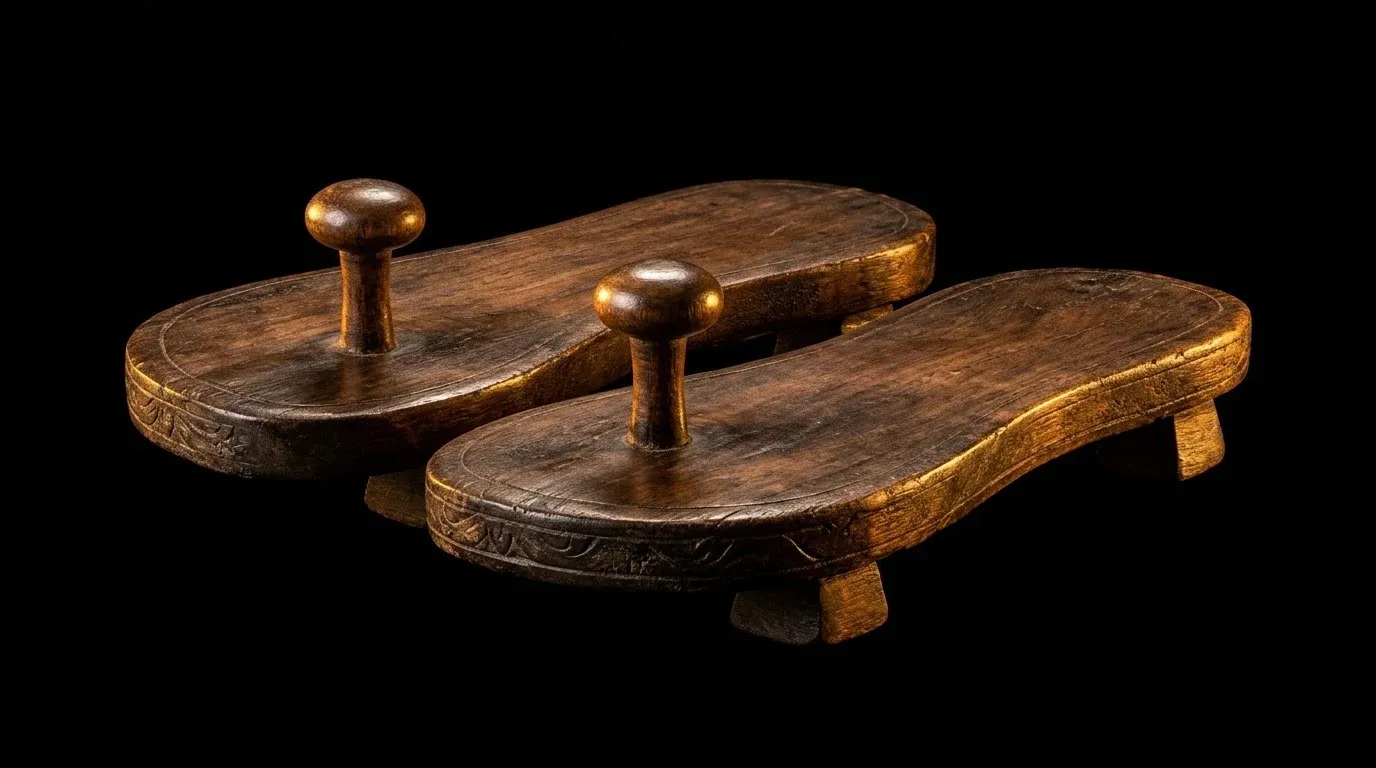
Footware
This is a paduka (पादुका), the oldest footwear in India. One small post, held between the first two toes. To keep it on, your toes must grip. That grip wakes up the whole chain: toes, arch, calf, knee, hip, spine.
Footware takes that old idea and rebuilds it with today’s materials, first for sport. A first filing followed in 2007.
Stage: being built, to be tested properly.
An honest note: research on how foot-strike affects injury is still mixed. That is the reason Footware is being built to be tested properly, with independent measurement. The pictures show a bare foot and a traditional paduka, not the product.

Heaven-met · a helmet turned inside out
Nature protects the brain in four layers, and it puts the soft ones on the outside.
A normal helmet does the reverse: hard outside, soft inside. Heaven-met turns the helmet around, so the soft part that soaks up the blow is on the outside.
Stage: designed. A first prototype is the next step.

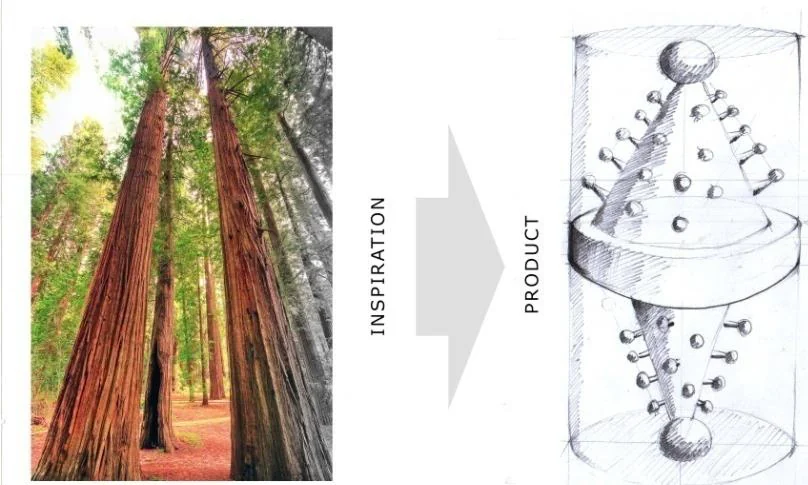
The redwood · the vibration damper
California’s redwoods have lived through centuries of earthquakes. They do not fight the shaking. Their shape lets it travel, spread out and fade.
Vivek’s Universal Vibration Damper borrows that shape. The same idea can be made small, for a cricket bat, a racquet or a bicycle, or large, for a building.
Press it and watch the trees.
Also on the bench: a quieter, more efficient propeller. A first model has been built and tested. Further out: a very light personal flying pack, starting with a quarter-scale model.

Sundancer · by aadimoto
Big batteries make electric vehicles heavy. Sundancer goes the other way. A small, light engine does only one job: it runs a generator. The wheels are always driven by an electric motor.
2 seats. 3 wheels. Stage: designed. First prototype to come.
The same power unit is being designed to fit boats, light aircraft and cargo drones.
04
Navy officer · Strategist · Founder
It looks like six different people. Pick one, and see the same idea underneath.
The years
The better part of twelve years, from cadet to lieutenant, as an electrical engineering officer. He learns how machines really work, and how they fail.
Republic Day, 1994. Vivek stands in naval whites as aide-de-camp to the Governor, the last posting of his Navy years. A white uniform, a parade ground, a perfect form. Twenty years later he shows this photo on a TEDx stage, as one of the forms he once lived by.

Rensselaer Polytechnic Institute, New York. Technology and new products.
Corporate technology strategy at one of America's largest engineering groups. Then the dot-com boom, from the inside. On a California beach he meets a stranger whose juggling inspires him.
The dress codes go first. Then the career ladder. He begins to question every form he has been living by.
What looked like an ending became the start of the real work: the body, and language. Back in India, he leads the Indian arm of a Japanese mobile technology company through the early mobile boom.
The shoe idea that will become Footware goes on paper.
He writes down the design philosophy that everything since has grown from: design for a creature with its bones on the inside.
He starts Aadivaahan, a design house for human-centred products, and begins writing online.
By now he has been recording made-up-on-the-spot music for years. He makes a film, Aadividya.

Fifty minutes, one whiteboard, one marker: a video he described as telling “the story of how I got here”. That January he also releases a book, PATH, with a film, Aadividya, and an album, Aadinaadam.

On a TEDx stage in Bengaluru he gives the idea a name: The Unperformance.

Three short films. In the first he tells how he became, in his words, “the perpetual rebel”.

Prototypes for Footware, Heaven-met and Sundancer. And one-to-one healing work under the name Avimukt.
One mind, many hands
One mind that works across many crafts, with nature as its teacher. Vivek has worked in very different rooms. A ship’s engine room. A governor’s house. A strategy office in America. A design bench in Bengaluru. A music room. A healing room. What joins them is one habit of mind. He looks at how nature already does a thing, and then makes it again, in steel, in sound, in colour or in words.
“Nothing is off topic, really. It’s all connected.”Vivek Chaturvedi, 2012
The Unperformance · TEDxNMIMSBangalore, 2014
More form means more structure. More structure becomes a squeeze. Vivek’s answer is to un-perform: drop the form, question everything, and find out who is left.
“You lose fear when you question everything, because everything is possible.”
Still from The Unperformance, TEDxNMIMSBangalore. Video: TEDx Talks, YouTube.
He opens words up to see what is inside. Tap one.
per·form

Films · 2016
Three short films from 2016. Each is about six minutes. Start with any one.
How he became, in his words, the perpetual rebel.
Where the music in him comes from.
Why he takes words apart, and what he finds inside.
05
Colour · Gesture · No titles
The hand that draws
Vivek also draws. In the summer of 2010 he began posting digital pictures, often with no words at all. None of the eight below carries a title from him, and he did not explain them. In a list of what he is, written in 2008, he put “Digital Artist” next to musician and writer. So we show eight of them here the way he did: by their file names, with the few words he put beside them.
Digital paintings by Vivek Chaturvedi, 2010. Tap a painting to see it larger.
06
Guitar · Tanpura tuning · No script
Vivek has played music all his life. He never took lessons on any instrument. “All the instruments and voices are me.”
A string can only move in whole loops. One, two, three. Every note he plays is made of these.
One pluck. Then it settles.
His music, in his words
For years he tried to play rock. “I spent about 30 years trying to be a rock star,” he told a TEDx audience in 2014.
In America his mother brought him an electronic tanpura, the drone that sits under Indian classical music. He left it playing for years. “This tanpura is the canvas on which music is written.”
One day he tuned his guitar to it, and the music came loose. He plays themes, not songs. “I’ve never tried to play songs as much as I’m trying to explore themes, which is what rags are.” Nothing is scripted. Every piece is found as he plays it.
He plays guitar, bansuri and other flutes, a Native American flute, cajon, djembe, tabla, didgeridoo, a Vietnamese jaw harp, keyboard, and voice. On the TEDx stage he played the jaw harp, made from the brass of old bombs: “from a bomb to music”.

“My guitar first of all is tuned like a tanpura or a sitar.”
“Muscle memory is never a gift, always a practice.”
“Aadinaadam is original sound.”
Nine to start with, in the order he chose
His note: “Was so sick, literally walking to the edge, and this came. Flow.”
Guitar. Posted in 2018, after a break from playing.
A tribute to Jeff Beck and Nitin Sawhney.
Voice and guitar. He called it one of the deeper pieces of the set.
Not a tune this time: Vivek talking to a group of design students.
If you feel called after this, go to the channel and scroll around.
07 · The sandbox
The sandbox is where people come to play with Vivek’s ideas, and with him. There are three ways in.
Bring him a product, a design or a way of working that does not feel right. He will look at it the way nature would.
Ask Vivek to consultMake something with him: a product, a piece of music, a talk or a workshop.
Start something togetherIf you want to back what he builds next, begin with a conversation.
Talk about investingConnect
Say what you have in mind, in your own words. Your note goes straight to his inbox, and he replies by email.
Or write to him directly: vivek@aadivaahan.com